
Leading automakers Maruti Suzuki India, Hyundai and Tata Motors reported a double-digit increase in dispatches to dealers in April as the demand remained robust especially for the sports utility vehicles. The country's largest car maker Maruti Suzuki India (MSI) said its domestic passenger vehicle wholesales rose 13 per cent to 137,320 units last month as against 121,995 units in April 2022. Sales of mini cars, comprising Alto and S-Presso, fell 18 per cent to 14,110 units as compared with 17,137 units a year ago.
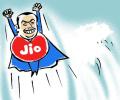
Billionaire Mukesh Ambani's Reliance Jio is India's strongest telecom brand in India, ahead of Bharti Airtel and Vodafone Idea Ltd, according to brand intelligence and data insights company TRA. TRA, formerly Trust Research Advisory, in its 'India's Most Desired Brands 2022' ranked companies according to their brand strength. Reliance Jio topped the telecom category, followed by Bharti Airtel, Vodafone Idea Ltd and BSNL.

Maruti Suzuki India and Hyundai reported single-digit sales growth in July with the sports utility segment continuing to drive overall demand in the market. Mahindra & Mahindra witnessed a 29 per cent increase in passenger vehicle dispatches while Tata Motors saw a marginal increase in the wholesales last month. Maruti Suzuki on Tuesday said its total domestic passenger vehicle sales stood at 152,126 units last month as compared to 142,850 units in the year-ago month, a growth of 6 per cent.

In October, the company had launched Ciaz in both petrol and diesel options.
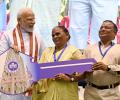
There was not a dry eye in sight as 3,024 beneficiaries of a slum rehabilitation project were overwhelmed by emotion as Prime Minister Narendra Damodardas Modi handed them the keys to their new homes at Vigyan Bhawan in New Delhi.

The previous May peak was observed in 2018 when the domestic PV wholesales stood at 301,238 units.

Sidhu in his affidavit, filed along with the nomination papers, declared total assets worth Rs 44.63 crore.

The Carens is a warning for cars such as the Tata Safari, Hyundai Alcazar, Maruti Ertiga, Toyota Innova Crista and Mahindra XUV 700, because Kia punches much harder than others in its weight category.

With cars like the Toyota Corolla and the Honda Civic selling in very small numbers and potentially even being phased out, the Octavia has very little competition, says Pavan Lall.

The police were also taken by surprise with what they witnessed -- a sophisticated setup for creating the synthetic drug, intense intoxicating smell inside the compound and the foreigners geared up with high-quality face masks.

The limited availability of flexible (flex)-fuel vehicles in the Indian market and the slow rollout of ethanol-blended petrol by oil-marketing companies (OMCs) remain major obstacles to achieving widespread use of biofuels in the transportation sector in India. Recently, two Union ministers have emphasised India's biofuel potential, arguing that it has the capacity and potential to lead a transition towards widespread biofuel adoption. Road Transport Minister Nitin Gadkari signalled that this transition is well underway and urged car manufacturers to quickly adapt and introduce new biofuel-run vehicles, lest the government resort to taxing diesel vehicles.

Benchmark equity indices Sensex and Nifty closed higher on Friday after two days of fall, helped by buying in metal, telecom and auto stocks amid a firm trend in global markets. Automakers led by Maruti Suzuki India, Hyundai, Mahindra & Mahindra reporting robust wholesales of passenger vehicles and GST collections crossing Rs 1.50 lakh crore for the third straight month in May also added to the optimism. The 30-share BSE Sensex climbed 118.57 points or 0.19 per cent to settle at 62,547.11.


The Toyota Minor League Cricket Championship is a national Twenty20 cricket competition for 27 city-based teams from across the United States, launched this summer. More than 200 games will take place at 26 venues, featuring more than 400 players.
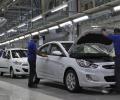
Automakers Maruti Suzuki, Tata Motors, Mahindra & Mahindra and Kia reported robust growth in their vehicle dispatches in the domestic market for August buoyed by festive demand and easing of semiconductor shortage woes. Other manufacturers like Hyundai, Toyota and Skoda also reported growth in wholesales in August as compared with the same month last year. The country's largest automaker Maruti Suzuki India said its domestic passenger vehicle dispatches increased by 30 per cent to 134,166 units in August as compared with 103,187 units in the year-ago month.
The country's leading automakers Maruti Suzuki and Hyundai Motor reported a decline in dispatches to dealers in March as shortage of electronic components impacted production. On the other hand, Tata Motors, Skoda and Kia India posted their highest ever monthly wholesales last month. Toyota Kirloskar Motor said its dispatches in March were the highest in the last five years while Mahindra & Mahindra also reported a robust increase in its passenger vehicle dispatches in March.

According reports, the pilot is reported to have stolen the small aircraft.

The company, which currently sells a range of vehicles from Alto to S-Cross, said it has taken the decision to hike prices due to an increase in input costs. The weighted average price rise, with effect from April 18, in ex-showroom prices (New Delhi) across models is 1.3 per cent, it added.

The next edition of the country's leading automobile show, the Auto Expo, will be held from January 13-18 next year, having been cancelled this year due to the COVID-19 pandemic. The last edition of the biennial automobile show took place in February 2020 amid fears of the spread of the coronavirus across the world. It was supposed to take place in February this year at Greater Noida but was postponed due to the worsening COVID-19 situation.
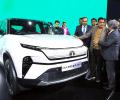
'I'm very much against petrol and diesel....'' 'I travel in an electric car.' 'I have had a really good experience with it.'

With a new chief executive officer (CEO) at the helm, the country's largest two-wheeler maker Hero MotoCorp is now looking to cut flab and move towards a leaner organisation. It has launched a voluntary retirement scheme (VRS) for its staff as it aims to make the organisation 'agile and future-ready'. Recently, the company's erstwhile chief financial officer (CFO) Niranjan Gupta was elevated as CEO.

First off the block will be a new multi-purpose vehicle which is being co-developed with Toyota - Suzuki's alliance partner. The model will also wear a Toyota badge.

Now all eyes are on the two Super 1000 events -- Yonex Thailand Open (January 12-17) and Toyota Thailand Open (January 19-24) as the world's best return to action following a prolonged break.

Driven by strong demand, the overall passenger vehicle dispatches crossed 3.35 lakh units in February as automakers, including Maruti Suzuki India, Hyundai, Tata Motors and Mahindra & Mahindra, reported robust sales during the month. The dispatches of more than 3.35 lakh units last month marked an 11 per cent over February 2022. It was also the highest ever overall wholesales in the month of February. The country's largest carmaker Maruti Suzuki India on Wednesday said its domestic wholesales rose 11 per cent to 155,114 units in February as compared with 140,035 units in the same month last year.

India is a market for low-priced cars with low running costs. The global majors don't have models that fit the bill; only Maruti and Hyundai have successful entry-level models, observes T N Ninan.

Jeep India, a part of automotive group Stellantis, on Tuesday announced the opening of bookings for its upcoming SUV Meridian, the production of which has also commenced from its joint venture manufacturing facility at Ranjangaon, Maharashtra. Customers can book the Meridian either at Jeep India dealership network or through the company's website with a down payment of Rs 50,000. Deliveries of the vehicle will start in June, it said in a statement.
Jeep India, a part of automotive group Stellantis, on Tuesday announced the opening of bookings for its upcoming SUV Meridian, the production of which has also commenced from its joint venture manufacturing facility at Ranjangaon, Maharashtra. Customers can book the Meridian either at Jeep India dealership network or through the company's website with a down payment of Rs 50,000. Deliveries of the vehicle will start in June, it said in a statement.

India is sceptical that Tesla might import into the country cars made in China. Tesla executives were in India last month and appear to have proposed a factory in the country. But do not be surprised if that does not happen in a hurry.
Maruti Suzuki, Hyundai and Tata Motors reported their highest-ever dispatches to dealers last fiscal, enabling the domestic passenger vehicle industry to log in best-ever performance to date. The country's largest carmaker Maruti Suzuki India reported its highest wholesales to date at 19,66,164 units, up 19 per cent from 16,52,653 units in 2021-22. Its domestic dispatches rose to 17,06,831 units in 2022-23, up 21 per cent from 14,14,277 units in 2021-22 fiscal.Hyundai Motor India said its overall wholesales last fiscal were the highest ever since commencing operations in the country.

Buying a car, particularly a diesel-powered one, is set to pinch the customers' pockets even more from the next financial year, as the second phase of Bharat Stage VI (BSVI) emission norms kicks in. The rules require cars to be compliant with real driving emission (RDE) norms, which measure pollutants emitted by cars while they are being driven on the road, unlike in a laboratory test. The norms may increase the cost of producing diesel vehicles by nearly Rs 75,000 to Rs 80,000, and petrol-powered ones by Rs 25,000 to Rs 30,000, analysts said.

The Mahindra's Scorpio-N becomes the first body-on-frame chassis SUV to secure a five-star Global NCAP rating.

These companies join the likes of other global firms Hyundai, Suzuki, Toyota, KFC, and Pizza Hut which have also apologised for social media posts by their business associates in Pakistan supporting Kashmir Solidarity Day following backlash in India and call for boycott of their products.
Leading carmakers Maruti Suzuki, Hyundai and Tata Motors reported robust dispatches to dealers in May on the back of strong demand for passenger vehicles across regions, even as the global semiconductor shortage continued to impact production. Mahindra & Mahindra, Kia India, Toyota Kirloskar Motor, Honda Cars and Skoda also witnessed strong demand for their models last month. The month of May also witnessed Tata Motors race ahead of Hyundai in terms of domestic wholesales.
Hero MotoCorp, Honda Motorcycles, Scooters India, TVS, Honda India, Toyota Kirloskar Motor, Ford, Nissan, Ashok Leyland are all giving the Auto Expo a miss this time.
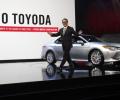
Automobile companies are worried about challenges from electric mobility, automation and connected vehicles.
High ground clearance, a wide cabin and tall stance all mean that the Carens glides over bad roads with ease and comfort and an engine performance that is adequate in terms of the power of this vehicle, says Pavan Lall.

Suspended Jharkhand IAS officer Pooja Singhal was paid "commission" by subordinate staff from MGNREGA funds of Khunti district which she and her husband subsequently utilised for acquiring various properties, the Enforcement Directorate (ED) claimed in a statement on Wednesday.

The company, which already has around 66 per cent market share in the hatchback segment and about 50 per cent in the overall domestic passenger vehicle segment, currently sells Vitara Brezza and S-Cross in the SUV segment. In an interaction with PTI, MSI managing director and CEO Kenichi Ayukawa acknowledged that there was some lag in launching new products due to the pandemic but the company is now on track regarding new model launches.
Passenger vehicle exports from India increased 43 per cent in FY22, with Maruti Suzuki India leading the segment with dispatches of over 2.3 lakh units, as per the latest data by industry body SIAM. The total passenger vehicle (PV) exports stood at 5,77,875 units in 2021-22 fiscal, as compared to 4,04,397 units in 2020-21. Passenger car shipments saw 42 per cent growth at 3,74,986 units, while utility vehicle exports rose 46 per cent at 2,01,036 units during the last fiscal, the data by the Society of Indian Automobile Manufacturers (SIAM) showed.

A strict enforcement of seat belt norms for rear passengers would be more effective than making an alarm go off when people do not belt up, according to officials at car manufacturers. Their comments came a day after Nitin Gadkari, the Union minister for road transport and highways, announced that seat belt alarms would be made mandatory for passengers in the rear seat of a car. "We have taken a decision that there will be a provision that the car seat belt alarm should beep when the rear seat rider is not wearing a seat belt. "We will impose fines if rear seat riders are not wearing seat belts.
